Brute force solution....
|
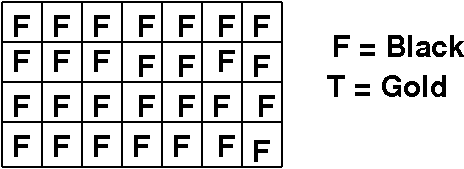
Representing the colors in a cell
|
The brute force algorithm
The brute force algorithm:
   cin >> k;  // k = # commands of the painter

   for ( int q = 0; q < k; q++ )
   {
      cin >> letter;
      cin >> number;

      if  ( letter == 'R' )
      {
         // Flip row "number"
         for ( int y = 1; y <= n; y++ )
            grid[number][y] = ! grid[number][y];
                  // Note: !true = false, !false = true
     }
      else
      {
         // Flip column "number"
         for ( int x = 1; x <= m; x++ )
            grid[x][number] = ! grid[x][number];
                  // Note: !true = false, !false = true
      }
   }
|
DEMO: CCC/2021/Progs/j5-brute-force.cc
How to make an efficient solution ?
|
How to show than an
2 operations are
commutative
|
How to show that R m and
C n are
commutative
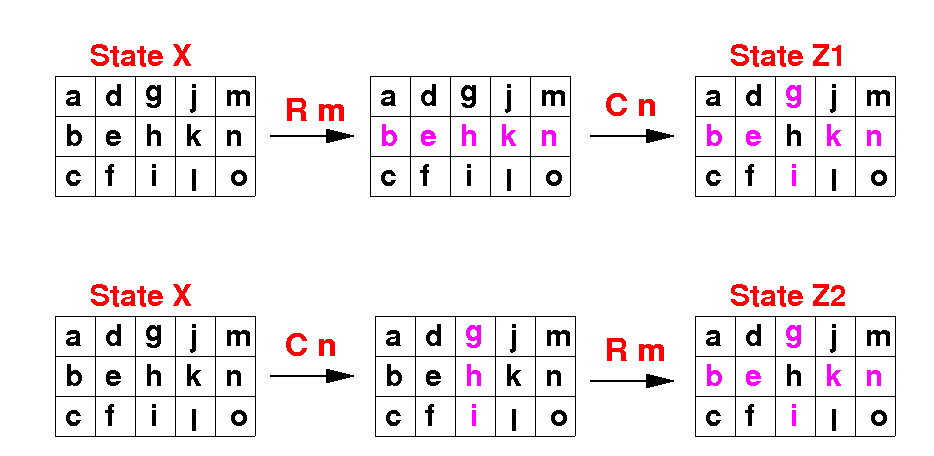
We can start in any state of the canvas We apply R m and then C n The result is Z1 We start again in any state of the canvas We apply C n and then R m The result is Z2 We get the same result ! So order does not matter |
How to show that R m and
R n are
commutative
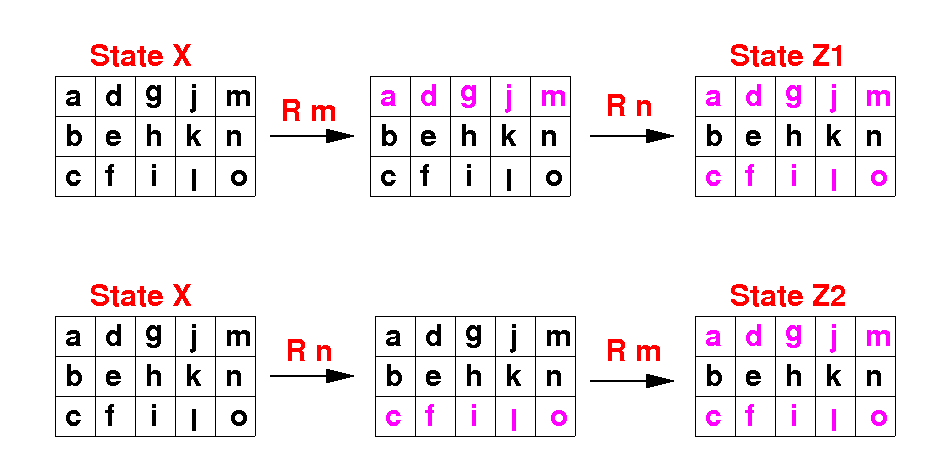
We can start in any state of the canvas We apply R m and then R n The result is Z1 We start again in any state of the canvas We apply R n and then R m The result is Z2 We get the same result ! So order does not matter |
Note: Same for C m and C n
Conclussion
|
There is one more property that you need to discover to get a speedy algorithm.
Notice that
R m and
R m is
a NULL operation
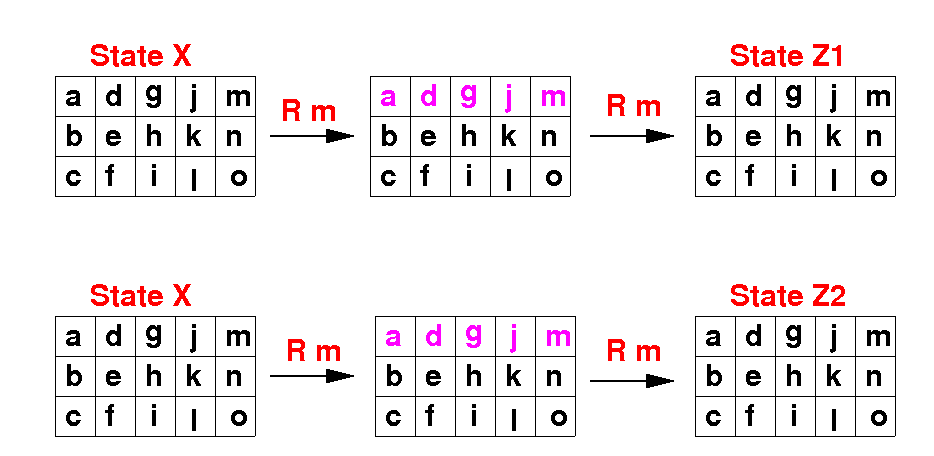
 R m  and  R m  not only commute
 The cancel each other out !!

 The trick to speed up the solution is:

    Cancel as many operations out as you can.
|
Note: Same for C n and C n - they also cancel
Speedier algorithm
   cin >> k;  // k = # commands of the painter

   /* -------------------------------------
      Store all the painting commands
      ------------------------------------- */
   for ( int q = 0; q < k; q++ )
   {
      Read in a command;
      Store it;
   }

   /* ---------------------------------------------
      Perform ONLY commands issued ODD # times !
      --------------------------------------------- */
   for ( each command X )
   {
      if ( command X is issued an odd number of times )
         do the command
   }
|
Task: finds a data structure that allows you to count the different commands fast !
Fast solution to J5: pre-processing
   // Used to eliminate duplicate commands
   int Rcommands[m+1], Ccommands[n+1];

   for (int x = 1; x <= m; x++)
       Rcommands[x] = 0;
   for (int x = 1; x <= n; x++)
       Ccommands[x] = 0;

   // Read in commands
   int k;
   cin >> k;

   char letter;
   int  number;

   // Read in commands and COLLADE duplicate commands
   for ( int q = 0; q < k; q++ )
   {
      cin >> letter;
      cin >> number;

      if ( letter == 'R' )
         Rcommands[number]++;  // One more R n
      else
         Ccommands[number]++;  // One more C n
   }
|
Fast solution to J5: process paint commands
   bool grid[m+1][n+1];

   for ( int x = 1; x <= m; x++ )
      for ( int y = 1; y <= n; y++ )
          grid[x][y] = false;           // false = B

   // Process Row commands
   for ( int x = 1; x <= m; x++ )
      if ( Rcommands[x]%2 == 1 )
         // Flip row x if this R command has an ODD count
         for ( int y = 1; y <= n; y++ )
             grid[x][y] = ! grid[x][y];  // !true = false, !false = true

   // Process Column commands
   for ( int y = 1; y <= n; y++ )
      if ( Ccommands[y]%2 == 1 )
         // Flip column y if this C command has an ODD count
         for ( int x = 1; x <= m; x++ )
             grid[x][y] = ! grid[x][y];  // !true = false, !false = true
|
You can count the number of true values in the cells...