Analysis
8 pieces of pie divided among 4 people:
1 1 1 5 1 2 2 3 2 2 2 2
1 1 2 4
1 1 3 3
9 pieces of pie divided among 4 people:
1 1 1 6 1 2 2 4 1 3 3 - 2 2 2 3
1 1 2 5 1 2 3 3
1 1 3 4
|
Analysis
     pie( nPieces, nPeople, min ) = # way to distribute nPieces of pie
                                    among nPeople where each get a
				    minimum of min pieces

 The recusrive property of this problem becomes clear with a larger example.

 Divide 13 pieces among 4 people:


      1 1 1 10   1 2 2 8   1 3 3 6   1 4 4 4
      1 1 2 9    1 2 3 7   1 3 4 5
      1 1 3 8    1 2 4 6
      1 1 4 7    1 2 5 5
      1 1 5 6


      2 2 2 7    2 3 3 5
      2 2 3 6    2 3 4 4
      2 2 4 5


      3 3 3 4
|
Analysis
     pie( nPieces, nPeople, min ) = # way to distribute nPieces of pie
                                    among nPeople where each get a
				    minimum of min pieces

 The recusrive property of this problem becomes clear with a larger example.

 Divide 13 pieces among 4 people:

  Give 1 pie  to person 1 and divide 12 pieces among 3 people:

      1 1 1 10   1 2 2 8   1 3 3 6   1 4 4 4
      1 1 2 9    1 2 3 7   1 3 4 5
      1 1 3 8    1 2 4 6
      1 1 4 7    1 2 5 5   (Note: each of them must get ≥ 1 piece)
      1 1 5 6

  Give 2 pies to person 1 and divide 11 pieces among 3 people:

      2 2 2 7    2 3 3 5
      2 2 3 6    2 3 4 4   (Note: each of them must get ≥ 2 pieces)
      2 2 4 5

  Give 3 pies to person 1 and divide 10 pieces among 3 people:

      3 3 3 4              (Note: each of them must get ≥ 3 pieces)
|
Analysis
Where is the recursion ? Divide 13 pieces among 4 people: (1) Give 1 pie to person 1 and divide 12 pieces among 3 people: 1 1 1 10 1 2 2 8 1 3 3 6 1 4 4 4 1 1 2 9 1 2 3 7 1 3 4 5 1 1 3 8 1 2 4 6 1 1 4 7 1 2 5 5 (Note: each of them must get ≥ 1 piece) 1 1 5 6 |
Analysis
Where is the recursion ? Divide 13 pieces among 4 people: (1) Give 1 pie to person 1 and divide 12 pieces among 3 people: 1 1 1 10 1 2 2 8 1 3 3 6 1 4 4 4 1 1 2 9 1 2 3 7 1 3 4 5 1 1 3 8 1 2 4 6 1 1 4 7 1 2 5 5 (Note: each of them must get ≥ 1 piece) 1 1 5 6 Ways to divide 12 pieces among 3 people: 1 1 10 2 2 8 3 3 6 4 4 4 1 2 9 2 3 7 3 4 5 1 3 8 2 4 6 1 4 7 2 5 5 (Note: each of them must get ≥ 1 piece) 1 5 6 This is a smaller version of the same type of problem !!! |
Analysis
Where is the recursion ? Divide 13 pieces among 4 people: (2) Give 2 pies to person 1 and divide 11 pieces among 3 people: 2 2 2 7 2 3 3 5 2 2 3 6 2 3 4 4 (Note: each of them must get ≥ 2 piece) 2 2 4 5 |
Analysis
Where is the recursion ? Divide 13 pieces among 4 people: (2) Give 2 pies to person 1 and divide 11 pieces among 3 people: 2 2 2 7 2 3 3 5 2 2 3 6 2 3 4 4 (Note: each of them must get ≥ 2 piece) 2 2 4 5 Ways to divide 11 pieces among 3 people: 2 2 7 3 3 5 2 3 6 3 4 4 (Note: each of them must get ≥ 2 piece) 2 4 5 This is a smaller version of the same type of problem !!! |
Analysis
Where is the recursion ? Divide 13 pieces among 4 people: (3) Give 3 pies to person 1 and divide 10 pieces among 3 people: 3 3 3 4 (Note: each of them must get ≥ 3 pieces) |
Analysis
Where is the recursion ? Divide 13 pieces among 4 people: (3) Give 3 pies to person 1 and divide 10 pieces among 3 people: 3 3 3 4 (Note: each of them must get ≥ 3 pieces) Ways to divide 10 pieces among 3 people: 3 3 4 (Note: each of them must get ≥ 3 pieces) This is a smaller version of the same type of problem !!! |
When can we use
recursion ?
Suppose we need to solve a problem of size n:
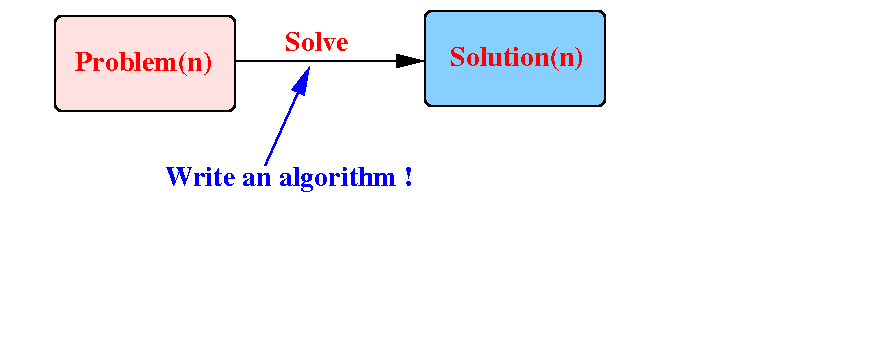
When can we use
recursion ?
Consider the other identical (but) smaller problems:
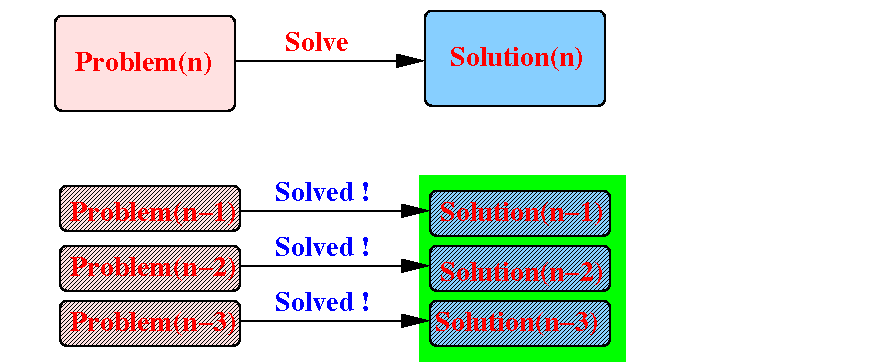
Suppose that we (already) have the solutions for all the smaller problems, i.e.: we do not need to solve them
Recursion = a divide and conquer algorithm
If we can construct Solution(n) using the solutions of the smaller problems:
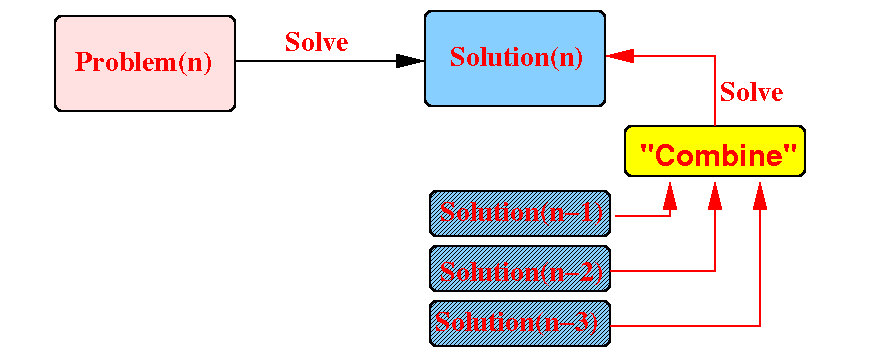
Then: we can use recursion to solve Problem(n) !!!
Basic form of a recursive algorithm
  solution solveProb( P(n) )
  {
     if ( P(n) is a base case )
     {
         return solution constructed by you;
	 // Note: there can be many base cases !
     }
     else
     {
        // Solve smaller problems to help you
	// find solution for P(n)

        sol1 = solveProb( P(n-1) );
	sol2 = solveProb( P(n-2) );
	...

	mySolution = combine( sol1, sol2, .... );
        return mySolution;
     }
|
Flesh out of the recusive part first...
Recursive algorithm for J5
  int divPie(nPieces, nPeople, min)
  {
     if ( P(n) is a base case )
     {
         return solution constructed by you;
	 // Note: there can be many base cases !
     }
     else
     {
        // Give i pieces to person 1 and
	// distr nPieces-i to nPeople-1 people
	// where each get at least i pieces

	for ( i = min; i <= nPieces/nPeople; i++ )
	{
	   helpSol = divPie(nPieces-i, nPeople-1, i);
	}

	mySolution = sum all the helpSol values
        return mySolution;
     }
|
What are the bases cases ???
Recursive algorithm for J5
  int divPie(nPieces, nPeople, min)
  {
     if ( nPerson == 1 )
     {
        Give him nPieces (only 1 way )
     }
     else
     {
        // Give i pieces to person 1 and
	// distr nPieces-i to nPeople-1 people
	// where each get at least i pieces

	for ( i = min; i <= nPieces/nPeople; i++ )
	{
	   helpSol = divPie(nPieces-i, nPeople-1, i);
	}

	mySolution = sum all the helpSol values
        return mySolution;
     }
|
J5 solution in C++
int divPie(int nPieces, int nPeople, int min)
{
   if ( nPeople == 1 )
   {
      return 1;                 // One way: this person gets nPieces
   }
   else
   {
      int nTotSols = 0, nSubSols;

      for ( int i = min; i <= nPieces/nPeople; i++ )
      {
         // Give person 1: i pies, then divide nPieces-i pies among others
         nSubSols = divPie( nPieces-i, nPeople-1, i);

         nTotSols = nTotSols + nSubSols;
      }

      return nTotSols;
   }
}
|
Problem: runs too slow for n=120 and k=20...