Re-using existing software
Problem description: we need to write a program (software) to solve a new problem:
|
How can we do this efficiently (i.e.: use the least effort as possible)
Re-using existing software
How to re-use existing sofware to build more complex software prior to ~1995
|
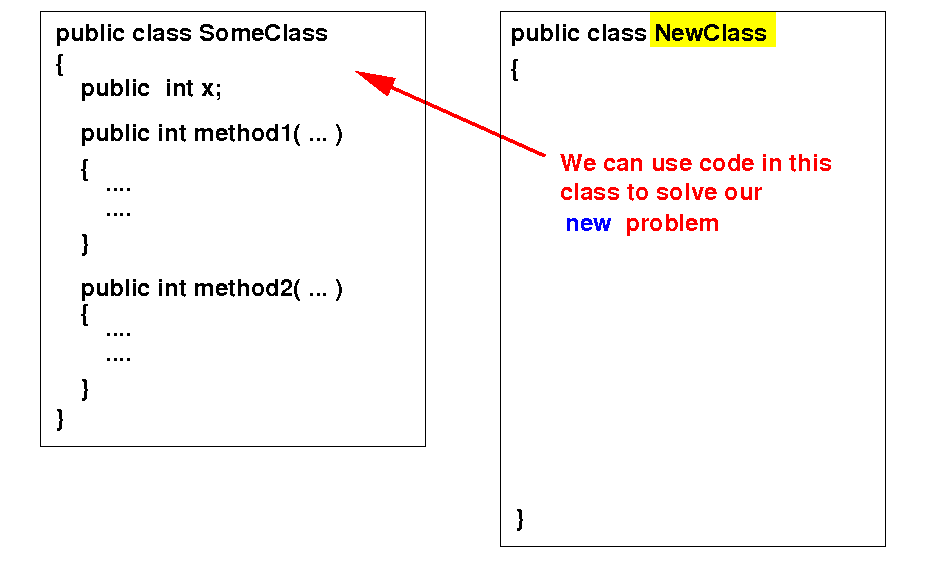
Before the invention of Object Oriented Programming (OOP)
Re-using existing software
How to re-use existing sofware to build more complex software prior to ~1995
|
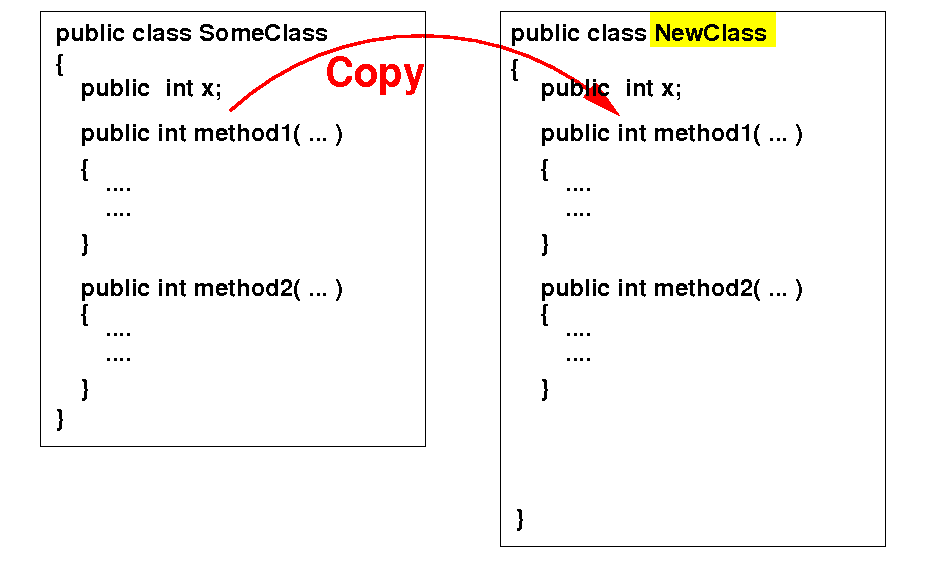
Before the invention of Object Oriented Programming (OOP)
Re-using existing software
How to re-use existing sofware to build more complex software prior to ~1995
|
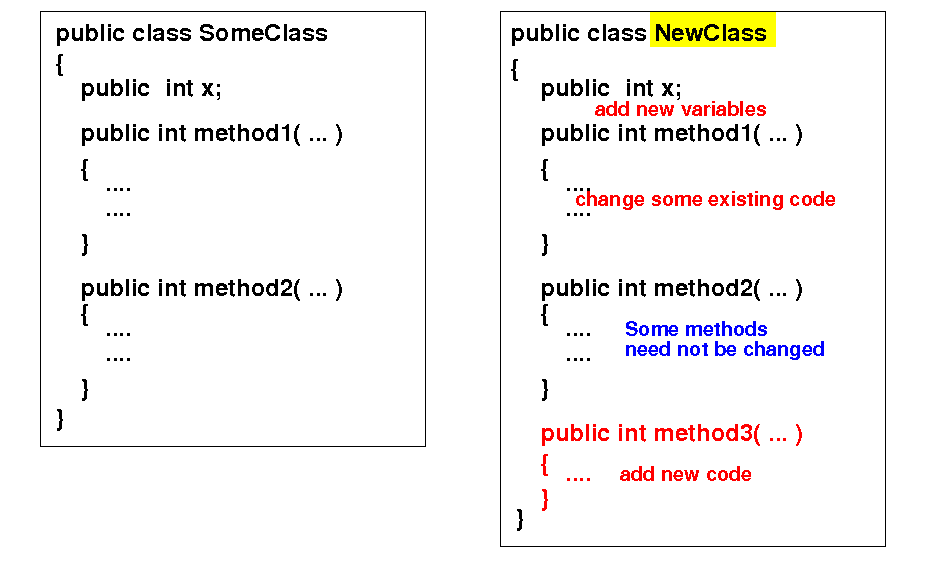
Before the invention of Object Oriented Programming (OOP)
Problems with this
technique for
re-using existing software
Redundancy:
|
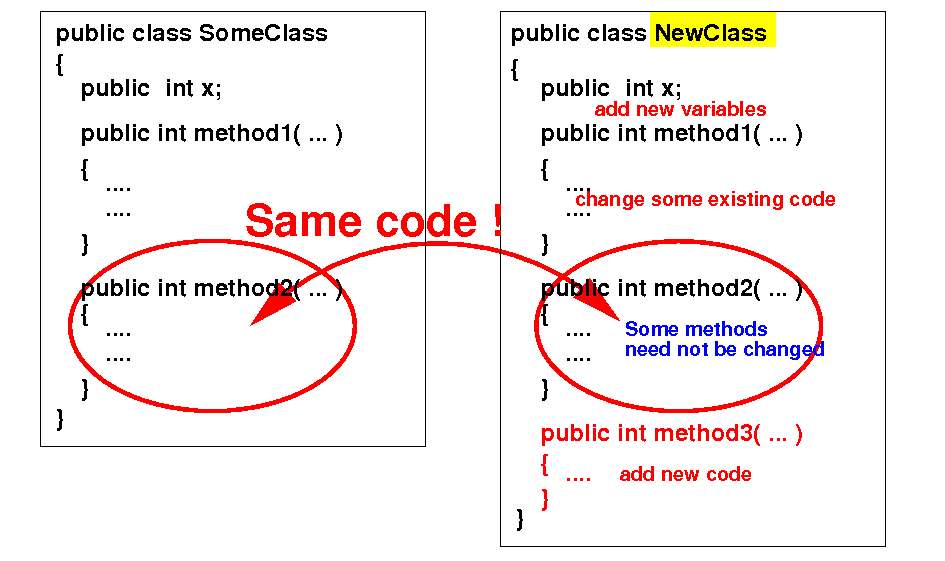
Hard to maintain programs: when we update the original software (from which we made the new software), we may need to update our programs that are based on the existing software
Re-using existing software
How to re-use existing sofware to build more complex software nowadays
|
After the invention of Object Oriented Programming (OOP)
Re-using existing software
How to re-use existing sofware to build more complex software nowadays
|
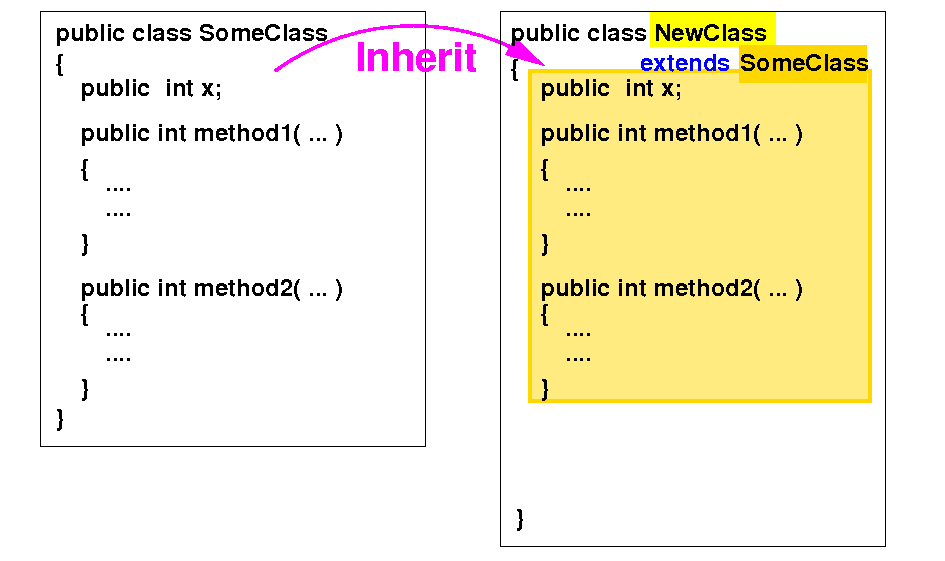
The new class (= software) will inherit (= "receive") all the variables and methods from class X
Experiment
Trace the execution of b.method1()
and b.method2()
public class SomeClass
{
public int x;
public SomeClass()
{
x = 99;
}
public void method1( )
{
System.out.println("I am SomeClass.method1(). x = " + x);
}
public void method2( )
{
System.out.println("I am SomeClass.method2(). x = " + x);
}
}
|
Re-using existing software
How to re-use existing sofware to build more complex software nowadays
|
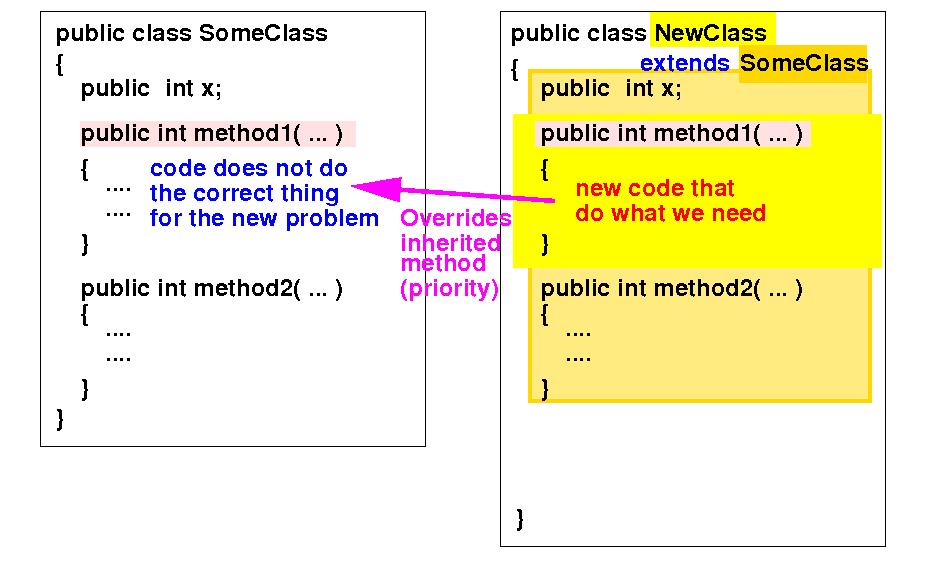
Methods defined inside the NewClass will take priority over an inherited method with the same method signature (this mechanism is called overriding)
Experiment
Trace the execution of b.method1()
and b.method2()
public class SomeClass
{
public int x;
public SomeClass()
{
x = 99;
}
public void method1( )
{
System.out.println("I am SomeClass.method1(). x = " + x);
}
public void method2( )
{
System.out.println("I am SomeClass.method2(). x = " + x);
}
}
|
Re-using existing software
How to re-use existing sofware to build more complex software nowadays
|
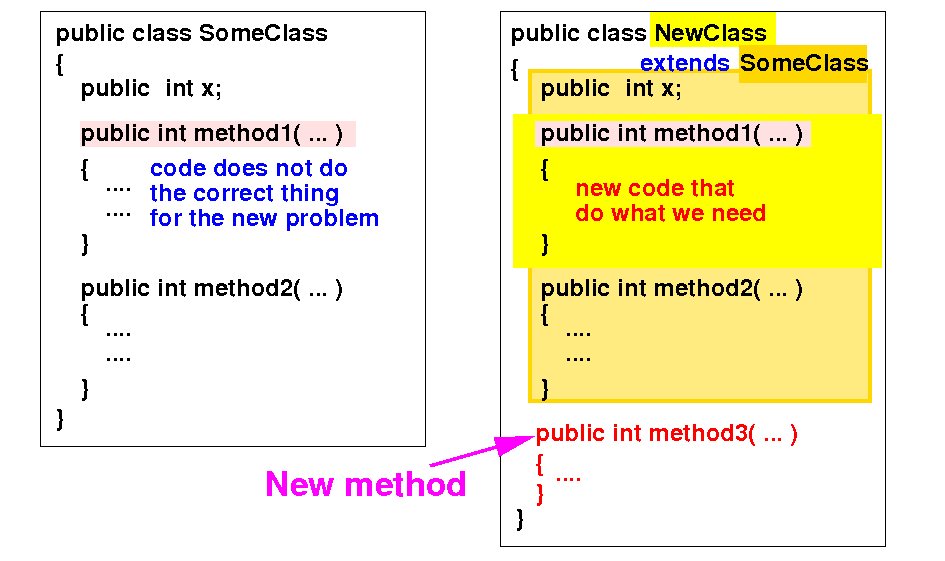
These new methods will only be defined in the NewClass (and will not be defined (inherit) in the orignal class (SomeClass))
Experiment
Trace the execution of b.method3()
public class SomeClass
{
public int x;
public SomeClass()
{
x = 99;
}
public void method1( )
{
System.out.println("I am SomeClass.method1(). x = " + x);
}
public void method2( )
{
System.out.println("I am SomeClass.method2(). x = " + x);
}
}
|
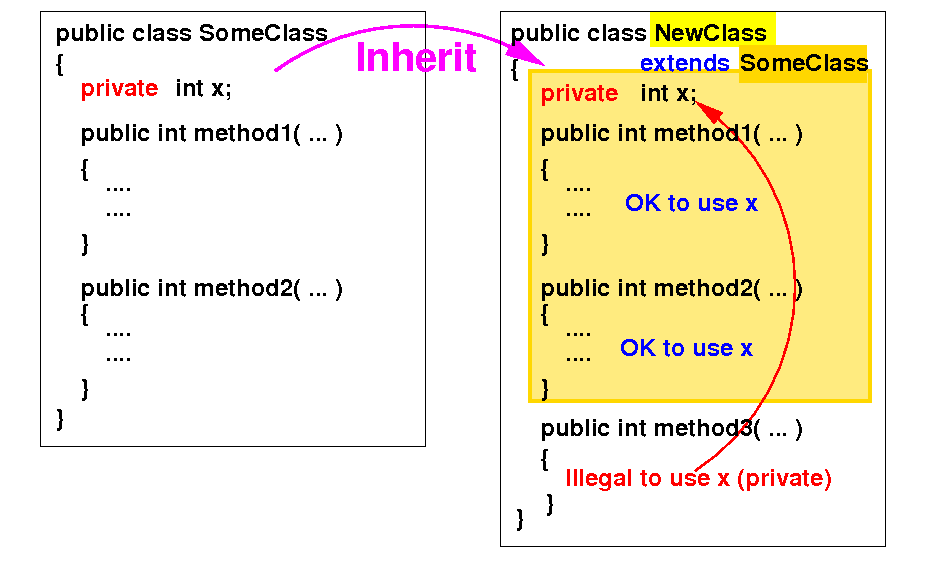
Important note:
Accessibility modifiers
are enforced on
inherited members !
|
Object Oriented Thinking
|