Class members and their
"visibility"
|
The effect of
public and
private
visibility (access) qualifiers
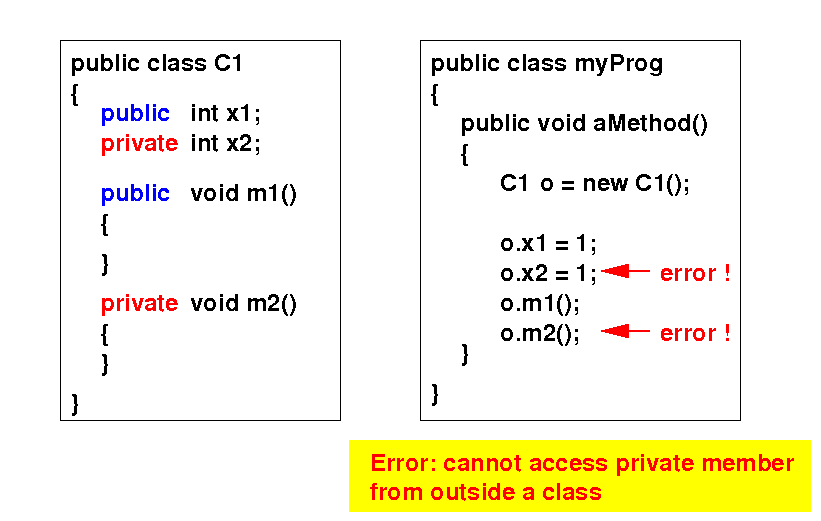
private members can not be accessed from outside the class:
The effect of
public and
private
visibility (access) qualifiers
private members can not be accessed from outside the class: demo program
public class C1
{
    public  int x1;
    private int x2;

    public  void m1() {}
    private void m2() {}
}

public class myProg
{
    public static void main(String[] args)
    {
        C1 o = new C1();  // Make a C1 object

	o.x1 = 1; // Access  a public  variable
	o.x2 = 1; // Access  a private variable
	o.m1();   // Invokes a public  method
	o.m2();   // Invokes a private method
    }
}
|
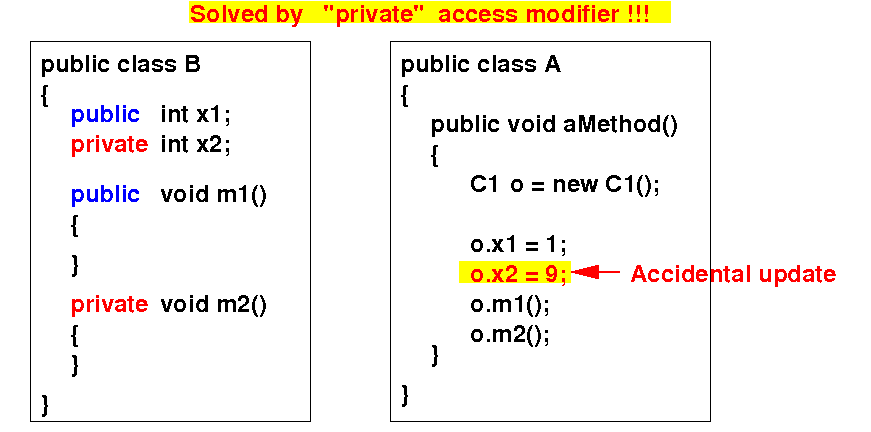
Why
do programming languages provide
different accessibilities
|
Java packages
|
How to create a package in BlueJ
|
How to create a
class
inside a
package p1 in BlueJ
|
Example of a class inside the
package p1
Use BlueJ and create this new class inside package p1:
package p1; // Inserted by BlueJ ! public class C1 { public int x1; int x2; // Default (= package) access modifier private int x3; public void m1() {} void m2() {} // Default (= package) access modifier private void m3() {} } |
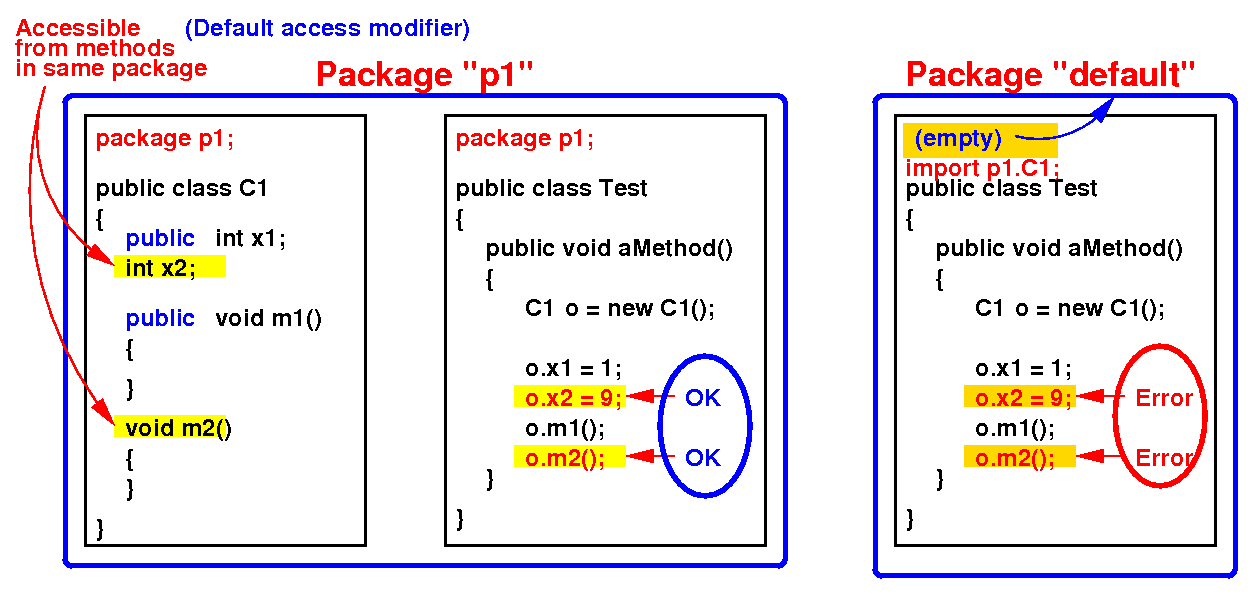
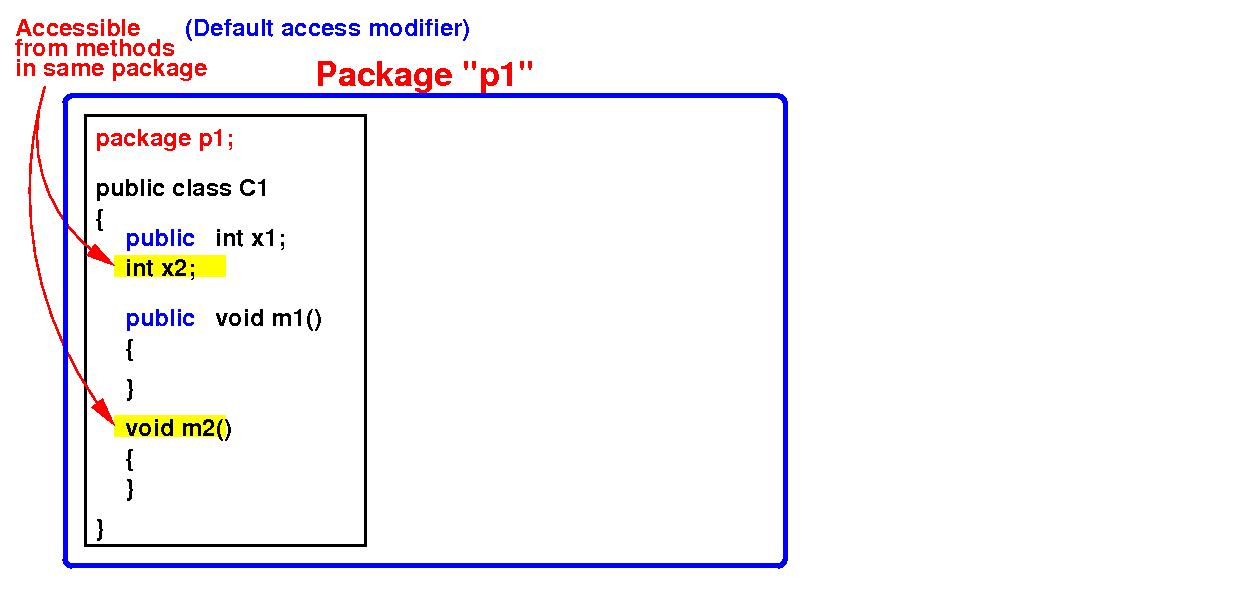
The members
x2 and
m2() has
no access modifier
In that case, they will be assigned with
the
default access modifier
The
default access modifier
|
The
default access modifier
|
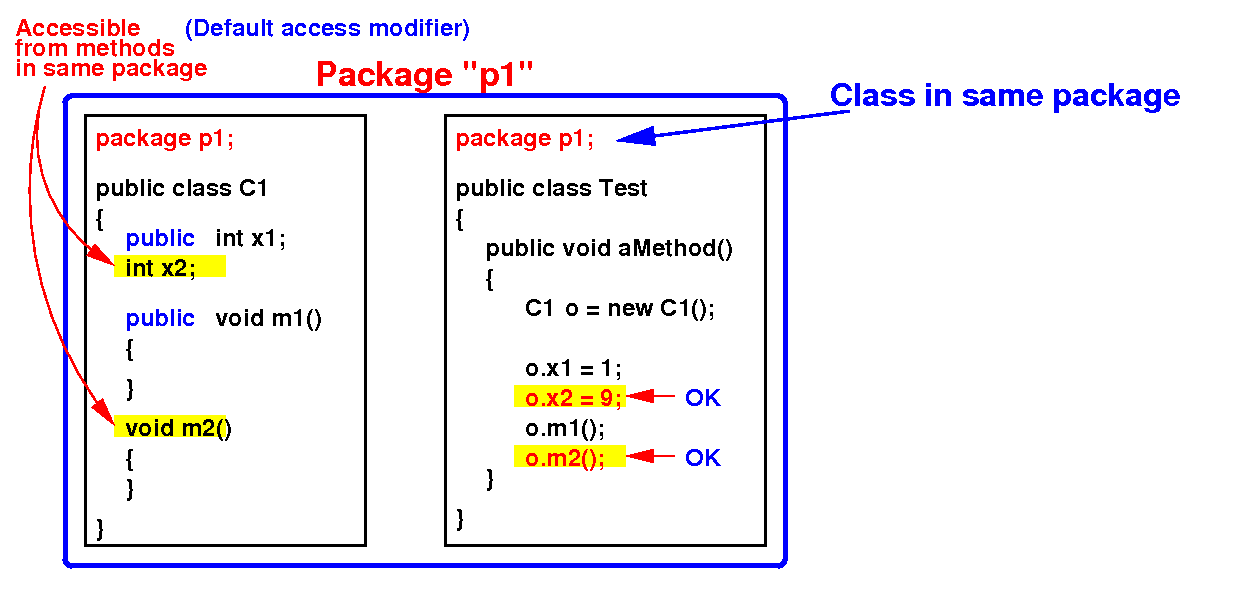
The
default access modifier
Demo: use BlueJ
package p1;
public class C1
{
public int x1;
int x2;
public void m1() {}
void m2() {}
}
|
The
default access modifier
|
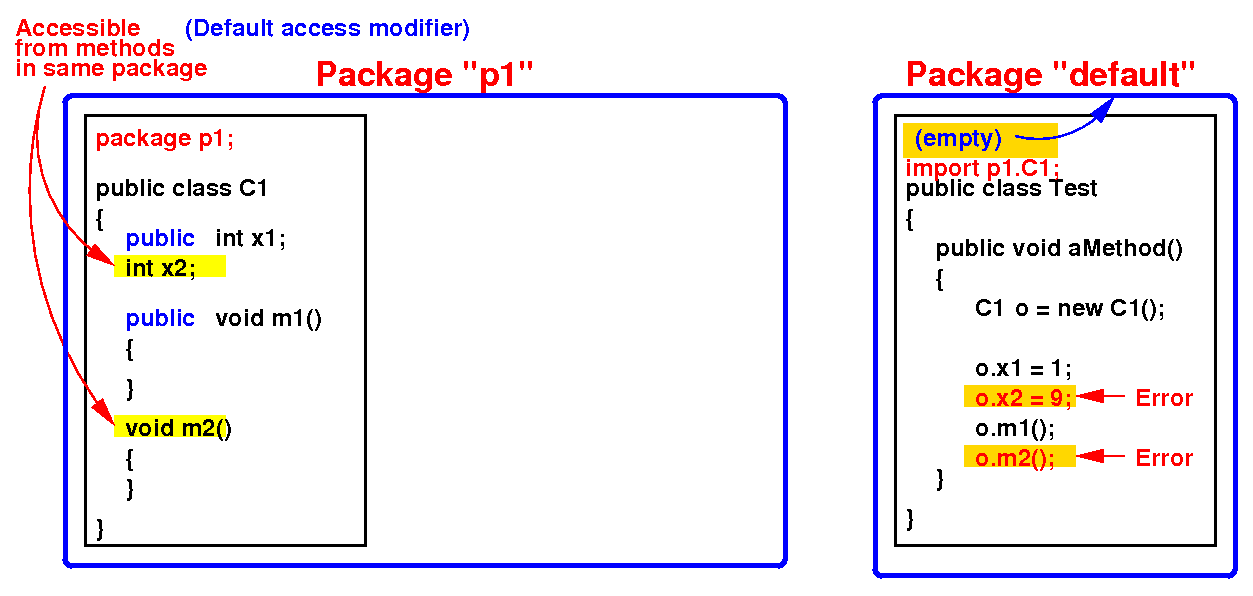
The
default access modifier
Demo: use BlueJ
package p1;
public class C1
{
public int x1;
int x2;
public void m1() {}
void m2() {}
}
|
Summary
Members with the default access modifier can be accessed from methods in classes inside the same package: