Vectors
in a plane
|
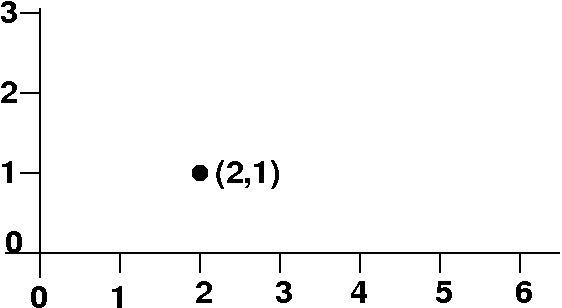
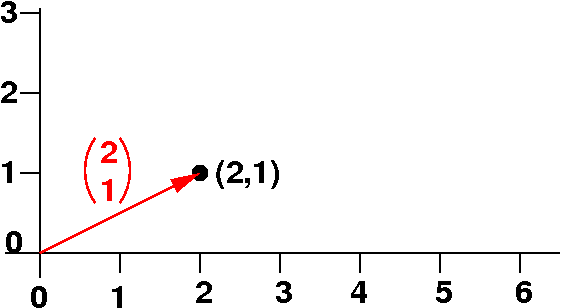
Vectors
in space
|
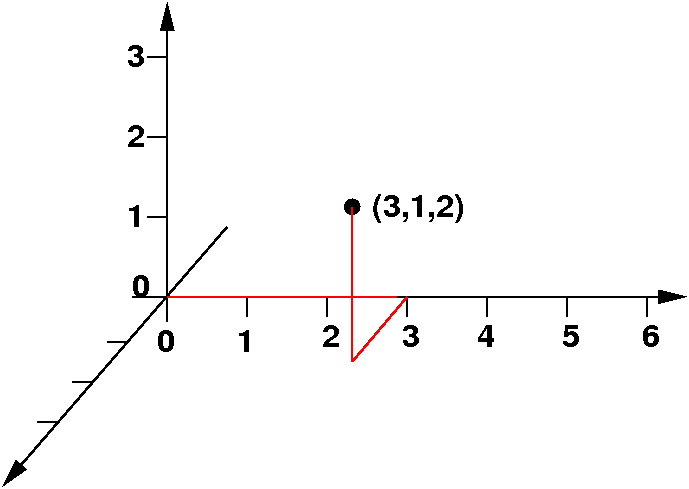
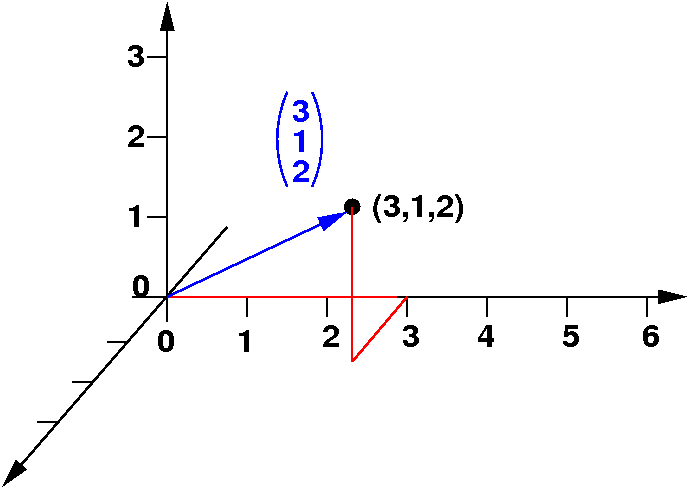
Representing
vectors in Java
|
Representing
vectors in Java
|
Vector addition
in Mathematics
and in Java
|
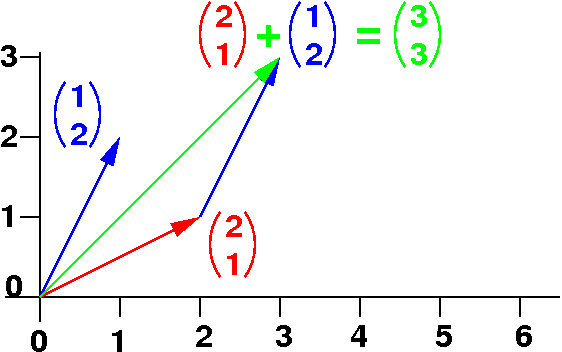
A vector addition
method
Vector operations are commonly provided as methods (because they are useful operations):
    public static double[] vectorAdd( double[] vector1, double[] vector2)
    {
        double[] vector3 = new double[vector1.length];

	for ( int i = 0; i < vector1.length; i++ )
	    vector3[i] = vector1[i] + vector2[i];

	return vector3;
    }
|
Let's write a vectorAdd( ) method that adds the input vectors and return the result
A vector addition
method
(1) create an output vector to store the result:
    public static double[] vectorAdd( double[] vector1, double[] vector2)
    {
        double[] vector3 = new double[vector1.length];

	for ( int i = 0; i < vector1.length; i++ )
	    vector3[i] = vector1[i] + vector2[i];

	return vector3;
    }
|
A vector addition
method
(2) add the input vectors and store the result in vector3:
    public static double[] vectorAdd( double[] vector1, double[] vector2)
    {
        double[] vector3 = new double[vector1.length];

	for ( int i = 0; i < vector1.length; i++ )
	    vector3[i] = vector1[i] + vector2[i];

	return vector3;
    }
|
A vector addition
method
(3) return the result vector vector3:
    public static double[] vectorAdd( double[] vector1, double[] vector2)
    {
        double[] vector3 = new double[vector1.length];

	for ( int i = 0; i < vector1.length; i++ )
	    vector3[i] = vector1[i] + vector2[i];

	return vector3;
    }
|
Demo program on next slide
Vector addition in Java
demo program
    public static void main(String[] args)
    {
        double[] v1 = {1,2,3};
        double[] v2 = {1,1,1};
        double[] v3;

        v3 = vectorAdd(v1,v2);
        System.out.println( Arrays.toString(v1) + " + " +
                            Arrays.toString(v2) + " = " +
                            Arrays.toString(v3) );
    }

    public static double[] vectorAdd( double[] vector1, double[] vector2)
    {
        double[] vector3 = new double[vector1.length];

	for ( int i = 0; i < vector1.length; i++ )
	    vector3[i] = vector1[i] + vector2[i];

	return vector3;
    }
|
DEMO: demo/08-array/16-vectors/VectorAdd.java