The
union-find algorithm
The union-find algorithm supports 2 operations:
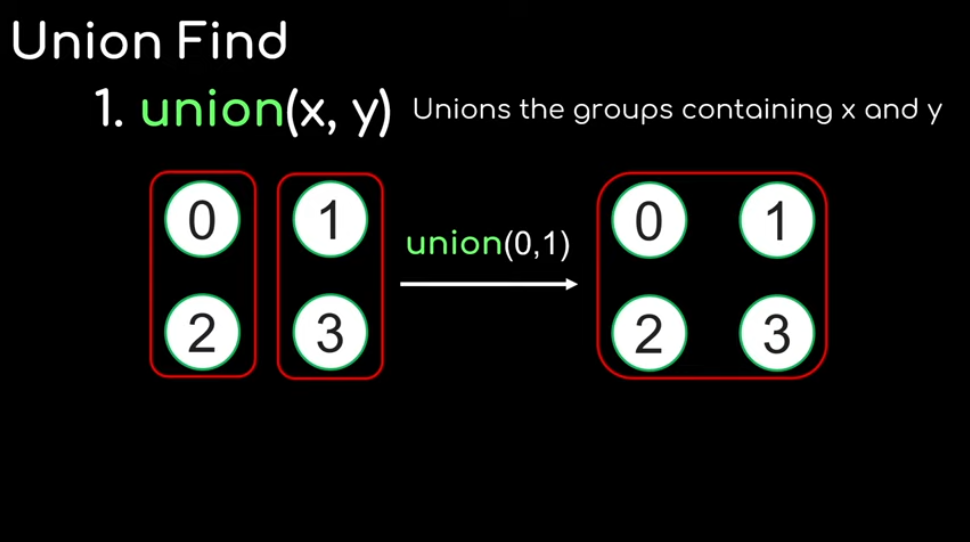
(1) union(x,y) unions the groups containing x and y into 1 group |
The
union-find algorithm
The union-find algorithm supports 2 operations:
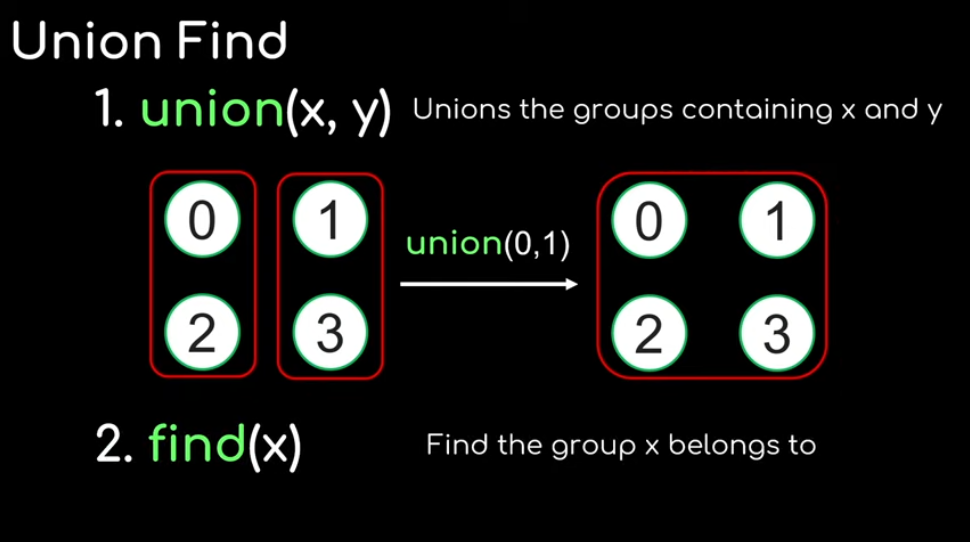
(2) find(x) finds the group containing x |
The
union-find algorithm
How to represent
the groups
Suppose we have these groups:
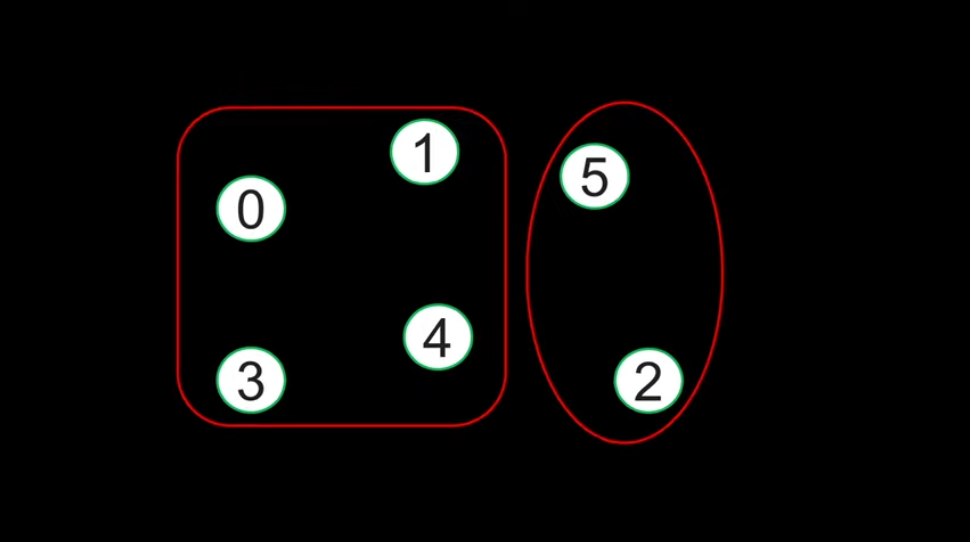
Group 1: 0, 1, 3, 4 Group 2: 2, 5 |
The
union-find algorithm
How to represent
the groups
How these groups are represented:
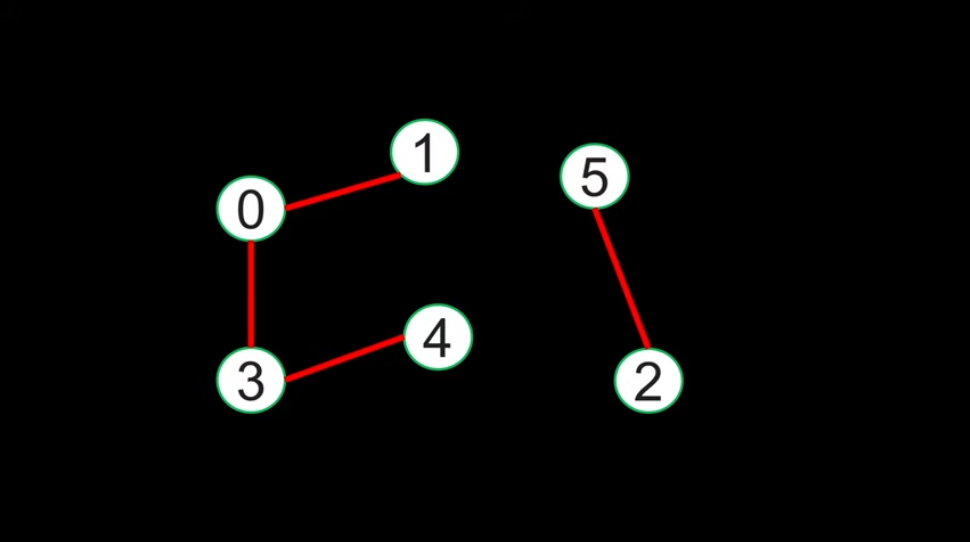
Nodes in same group are connected with edges into a tree |
The
union-find algorithm
How to represent
the groups
How these groups are represented:
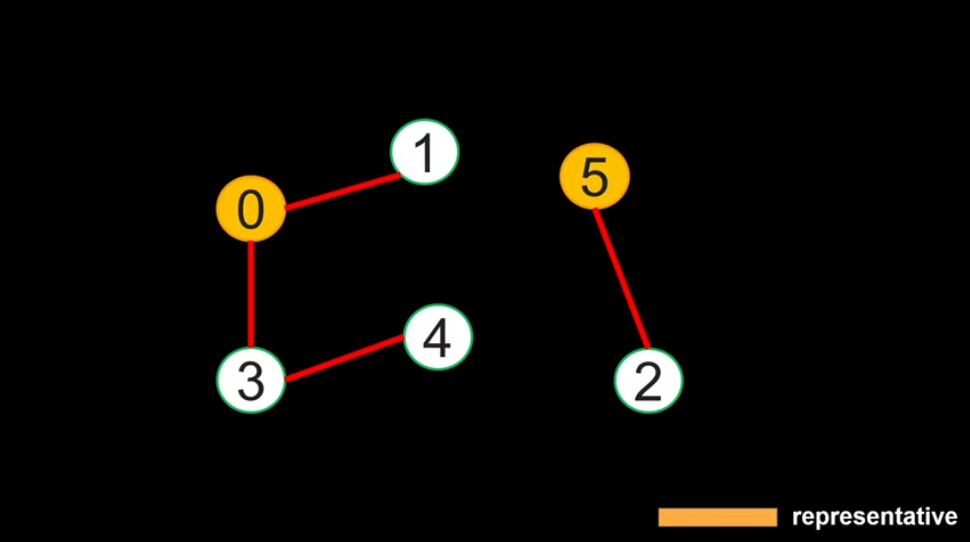
The root node of a tree is the "representative" element of the (entire) group |
The
union-find algorithm
How to represent
the groups
How these groups are represented: (actual representation)
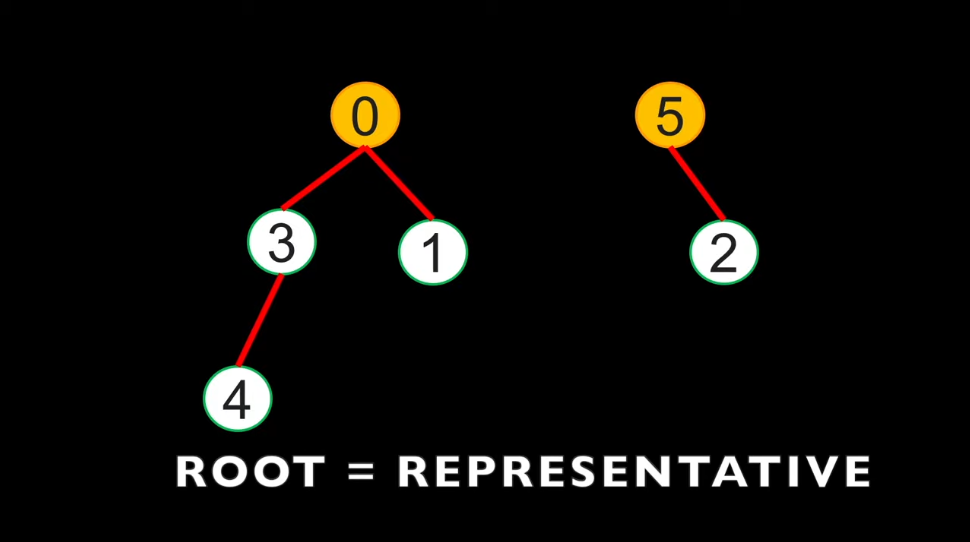
The root node of a tree is the "representative" element of the (entire) group |
The
union-find algorithm
The Find(x) function
The Find(x) function:
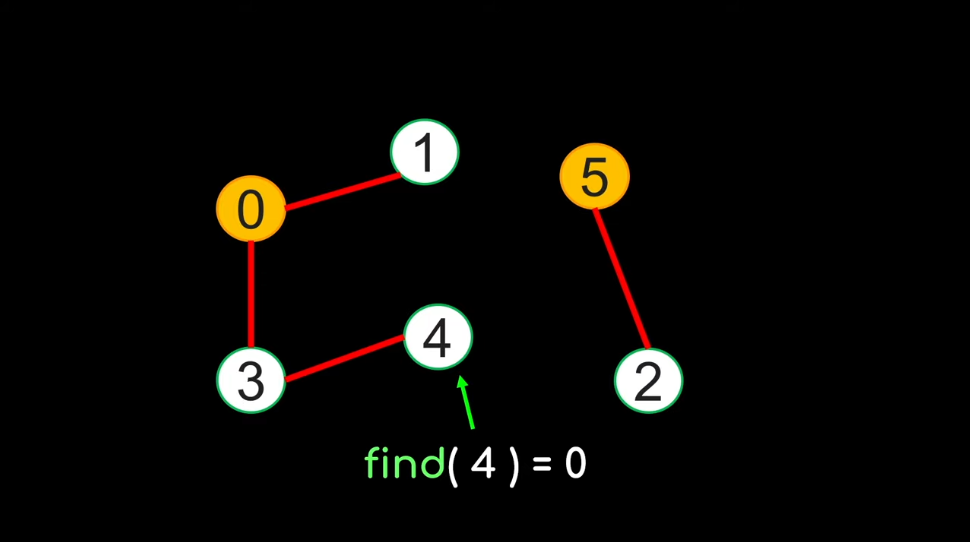
The find(x) function will return the "representative" node of the group that contains x |
The
union-find algorithm
The Find(x) function
The Find(x) function:
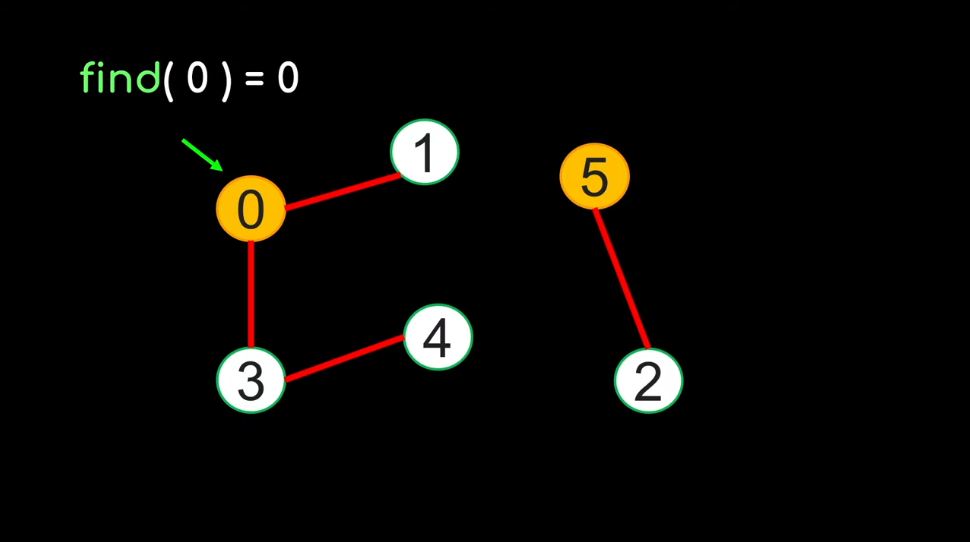
The find(x) function will return the "representative" node of the group that contains x |
The
union-find algorithm
The Find(x) function
The Find(x) function:
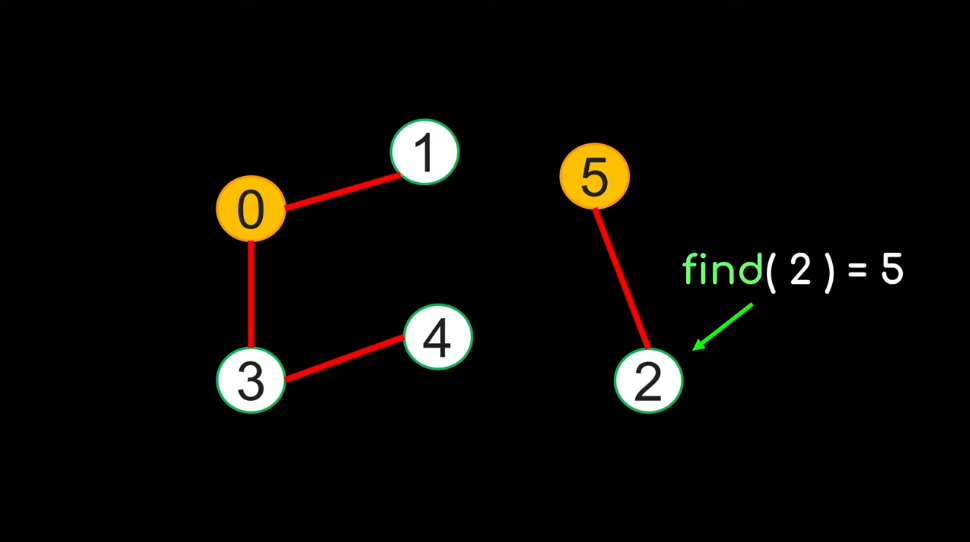
The find(x) function will return the "representative" node of the group that contains x |
The
union-find algorithm
Using the
representation
Question: How can we tell if 2 elements x and y belongs to the same group ?
|
|
The
union-find algorithm
Using the
representation
Question: How can we tell if 2 elements x and y belongs to the same group ?
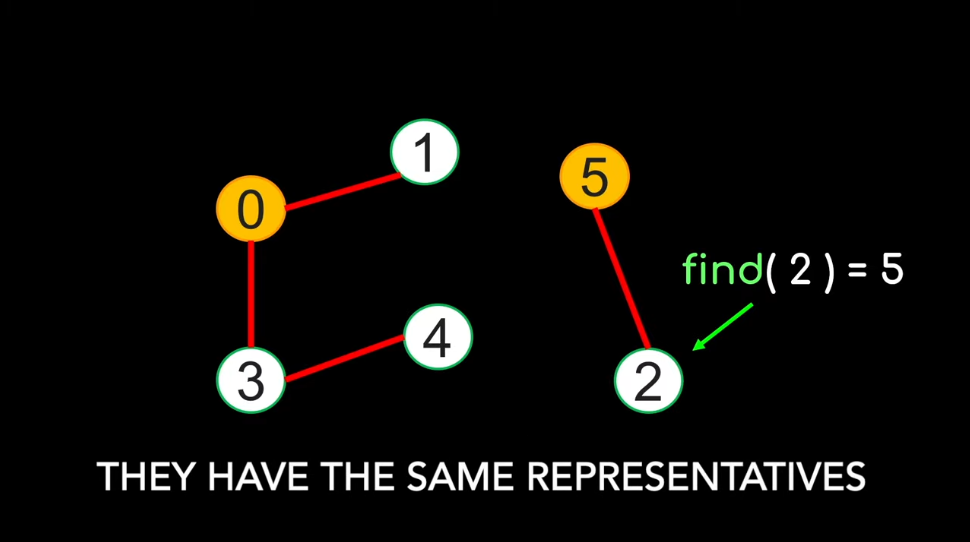
x and y belong to same group <===> Find(x) == Find(y)
|
The
union-find algorithm
Implementing the
Find(x) function
Implementing the Find(x) function:
Find(4) = ?? |
The
union-find algorithm
Implementing the
Find(x) function
Implementing the Find(x) function:
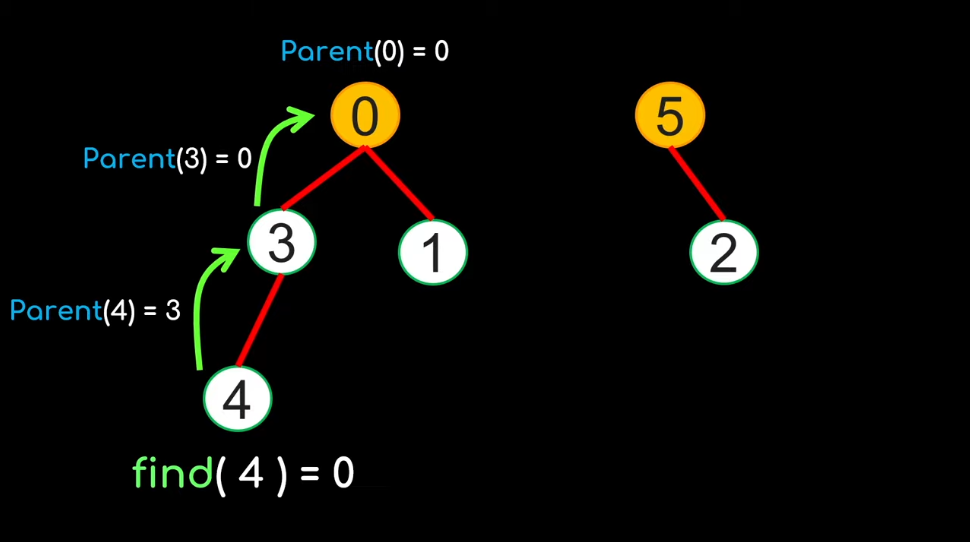
   Find(4) = 0
   Follow the parent link until you find the root node
|
The
union-find algorithm
Implementing the
Find(x) function
Important take-away from the implementation of the Find(x) function:
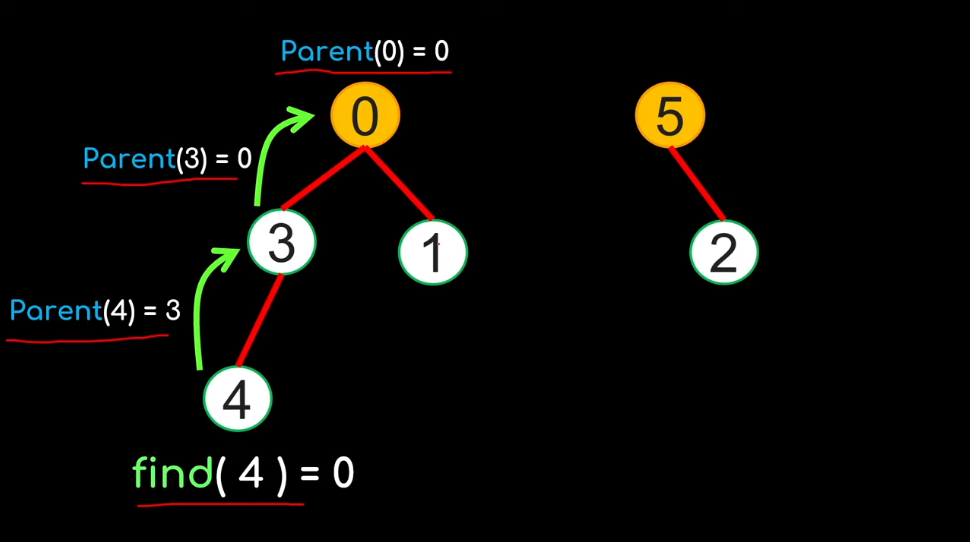
We only need the parent link (no child links necessary)
|
The
union-find algorithm
Implementing the
Union(x, y) function
Implementing the Union(x, y) function:
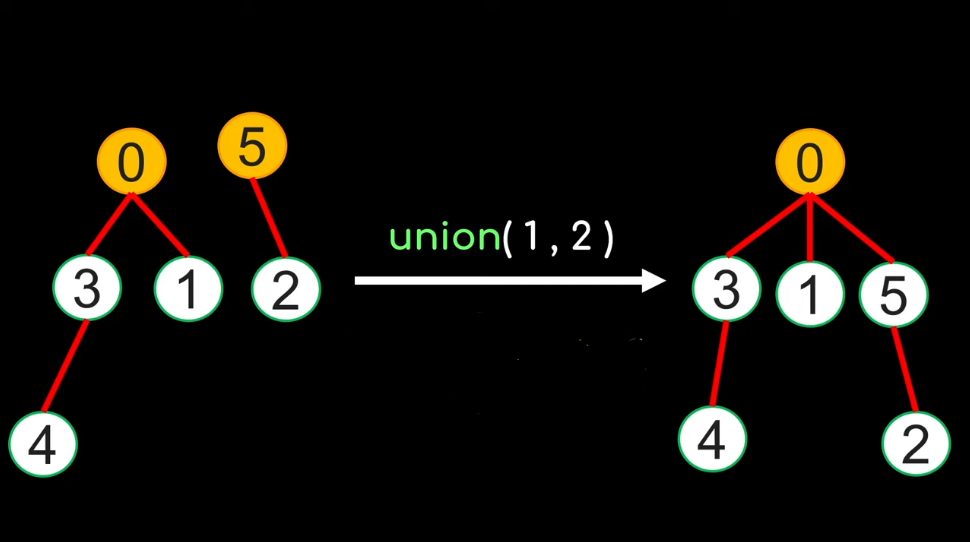
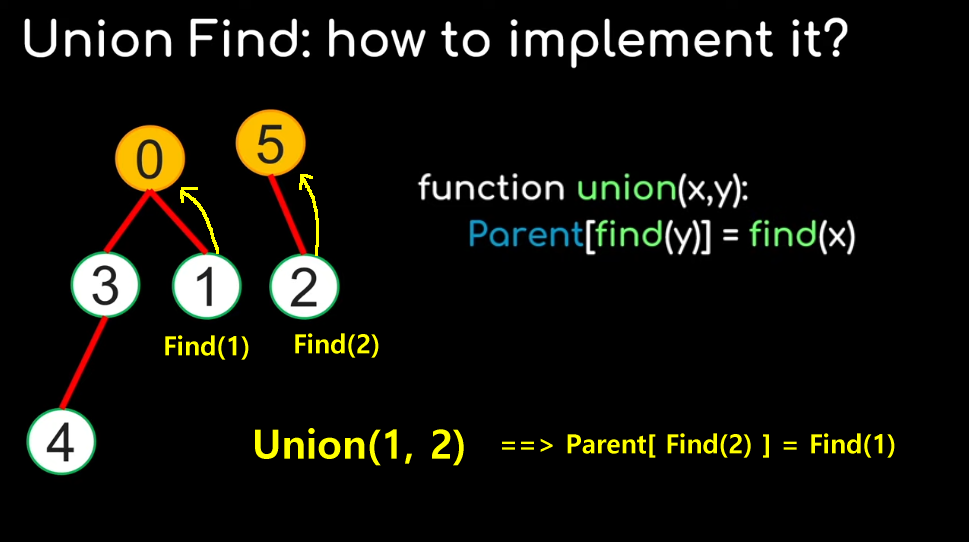
Union(1, 2) ==> Make group(2) into a subtree of root of group(1)
|
The
union-find algorithm
Implementing the
Union(x, y) function
Implementing the Union(x, y) function:
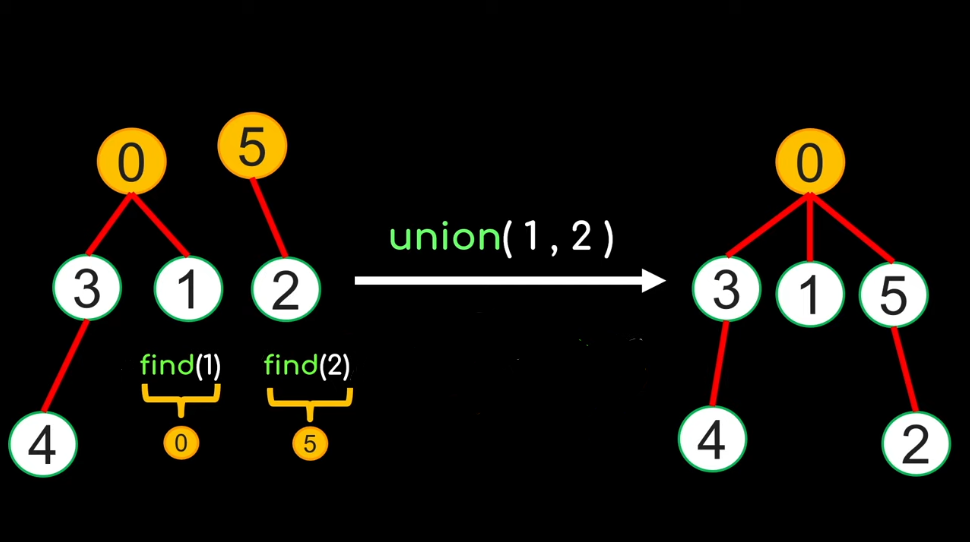
(1) Find root(1) = Find(1) and root(2) = Find(2) |
The
union-find algorithm
Implementing the
Union(x, y) function
Implementing the Union(x, y) function:
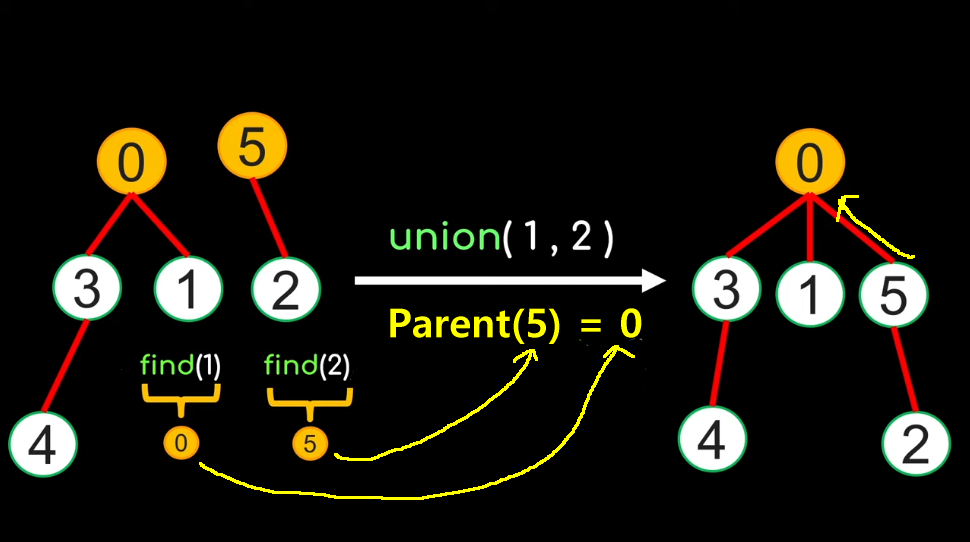
(2) Set: parent(root(2)) = root(1) |
The
union-find algorithm
Data structure to
represent the
tree
To represent the tree, we only need the parent link:
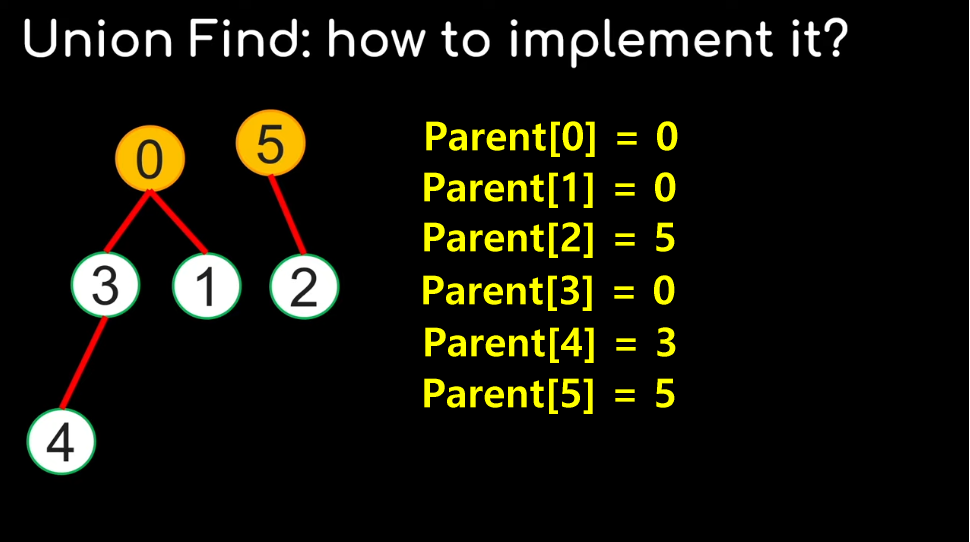
Parent[i] = node ID of the parent node of i Initially: every node forms its own group |
The
union-find algorithm
Data structure to
represent the
tree
Initial state:
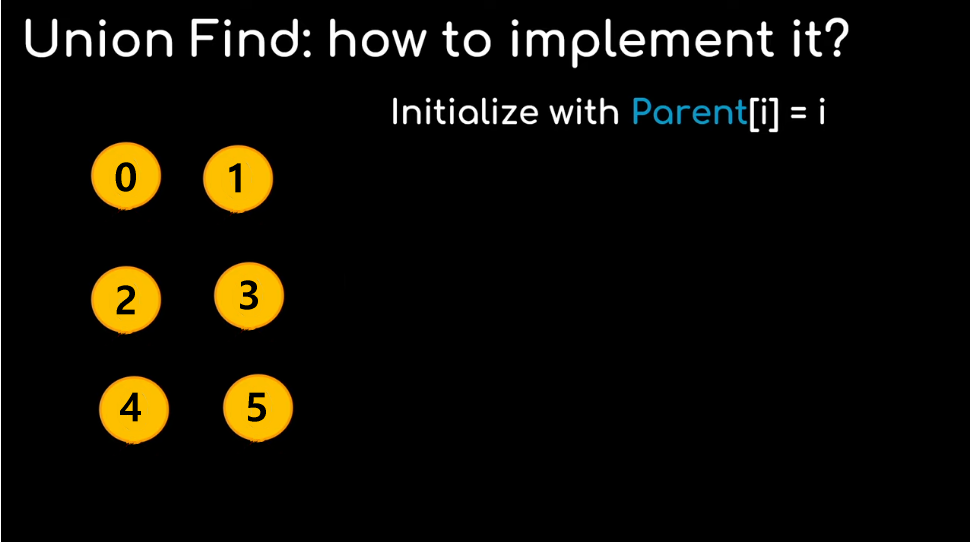
Initially: every node forms its own group |
The
union-find algorithm
The
Find(x) algorithm
Find(x): traverse the parent link until you reach the root node:
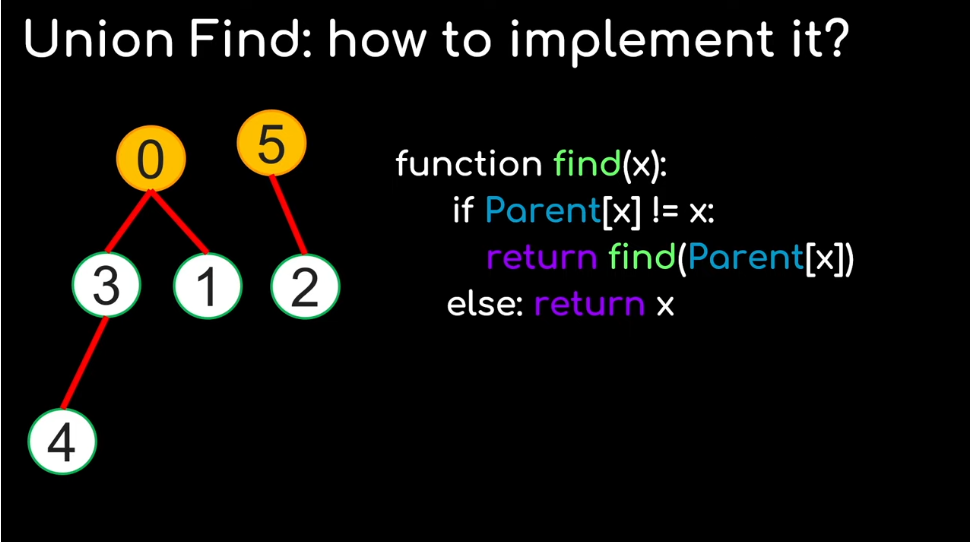
The root node is a node x where Parent[x] == x |
The
union-find algorithm
The
Union(x, y) algorithm
Union(x, y): sets the parent node ID of root(y) (= Find(y)) to the node root(x) (= Find(x)):
This concludes the discussion on the Union-Find algorithm |